A shop counter that starts with a conversation
For KSMC, the idea was simple: let a customer ask for what they need on WhatsApp, and help the shop turn that conversation into a request the counter can handle.
The shop is already in the conversation
A person working on a repair does not always know the exact name of the item in their hand. They may know that they need a particular pipe, a sheet of sandpaper, or a part that looks like the one in a photo. Before they can get back to work, they need to find out whether a local shop has a suitable option, what it costs, and how they can collect it.
At KSMC, the natural place for that question is often WhatsApp. A worker can send a quick message or a voice note instead of stopping to browse an unfamiliar website. For the shop owner, however, every message still needs attention: identify the product, check the catalog, answer the customer, and make sure the request reaches the counter.
I wanted to make that familiar conversation the starting point for a simpler shopping experience. The goal was not to make the customer learn a new app; it was to bring useful product discovery into a place they already know how to use.
From a message to a product
The assistant starts with the customer’s request. Someone can describe what they are looking for in Tamil, Tanglish, or English, and the system searches a catalog maintained by the shop. Instead of returning an abstract answer, it can present product information and photos so the customer has something concrete to compare.
That matters in a hardware store because a name alone is not always enough. Size, material, variant, and quantity can change what the customer actually needs. A clear product card gives the conversation a shared reference: the customer can look at an option, say whether it is right, and continue without needing to understand the shop’s internal catalog.
The experience I am aiming for has some of the convenience people expect from an online marketplace—discovering items, seeing a price, and putting together a request—but it happens through a conversation with a local shop.
- CustomerAsks in WhatsApp
- AssistantFinds catalog options
- CounterReviews and confirms
The counter confirms the request, stock, final price and pickup details.
Building a path to the counter
Finding an item is only the first part of the job. The flow also needs to carry the customer’s choices to the people who will prepare them. In the guided pickup flow, a customer can browse or search, choose a product and quantity, review a basket, and send the request to the shop. They can also continue to type naturally rather than relying only on buttons.
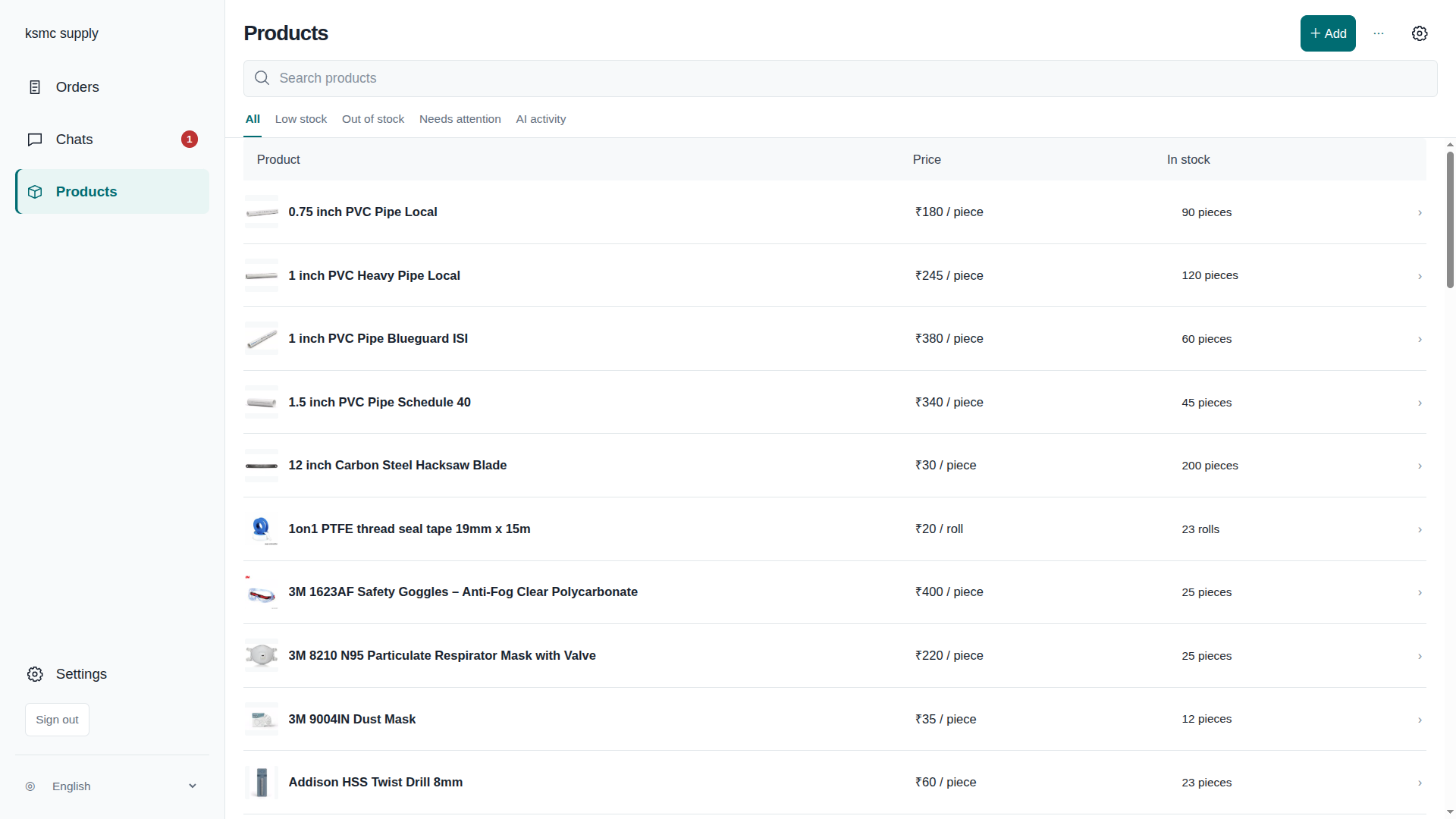
On the other side, the shop dashboard brings product records and incoming requests into a more usable view. The catalog image on this page is from that interface. It shows how the shop can maintain the product information that the assistant relies on; the customer does not have to navigate this dashboard to ask a question.
My aim was to keep both sides simple: a familiar chat for the customer and an organized counter view for the shop. The system should help the worker move from “I need this” to a request the owner can understand, without turning a short purchase into a complicated process.
Keeping the shop in control
A useful assistant must know where its job ends. The current documented flow treats the customer’s selection as a request to the counter. Shop staff confirm the items, availability, quantity and final price; they can prepare a revised offer when something needs to change, and mark an order ready for pickup or collected as the work progresses.
The broader experience can include a bill and a pickup time communicated through the same conversation, but the reviewed project documentation does not establish fully automatic payment or final billing. The shop remains responsible for those confirmations. That distinction matters: a helpful message should not become a promise of stock or payment that the business has not actually confirmed.
What this project is really about
KSMC’s assistant brings together three ordinary pieces of a retail workflow: the words a customer uses, the product information the shop keeps, and the counter’s decision about what happens next. The engineering is in connecting those pieces without losing the simplicity of asking a person a question.
The current material demonstrates the interface and the guided request flow. The next useful step for the case study would be to show an anonymized conversation from first question to counter confirmation, so a visitor can see the whole journey rather than only the catalog.