A small button, a meeting, and a useful next step
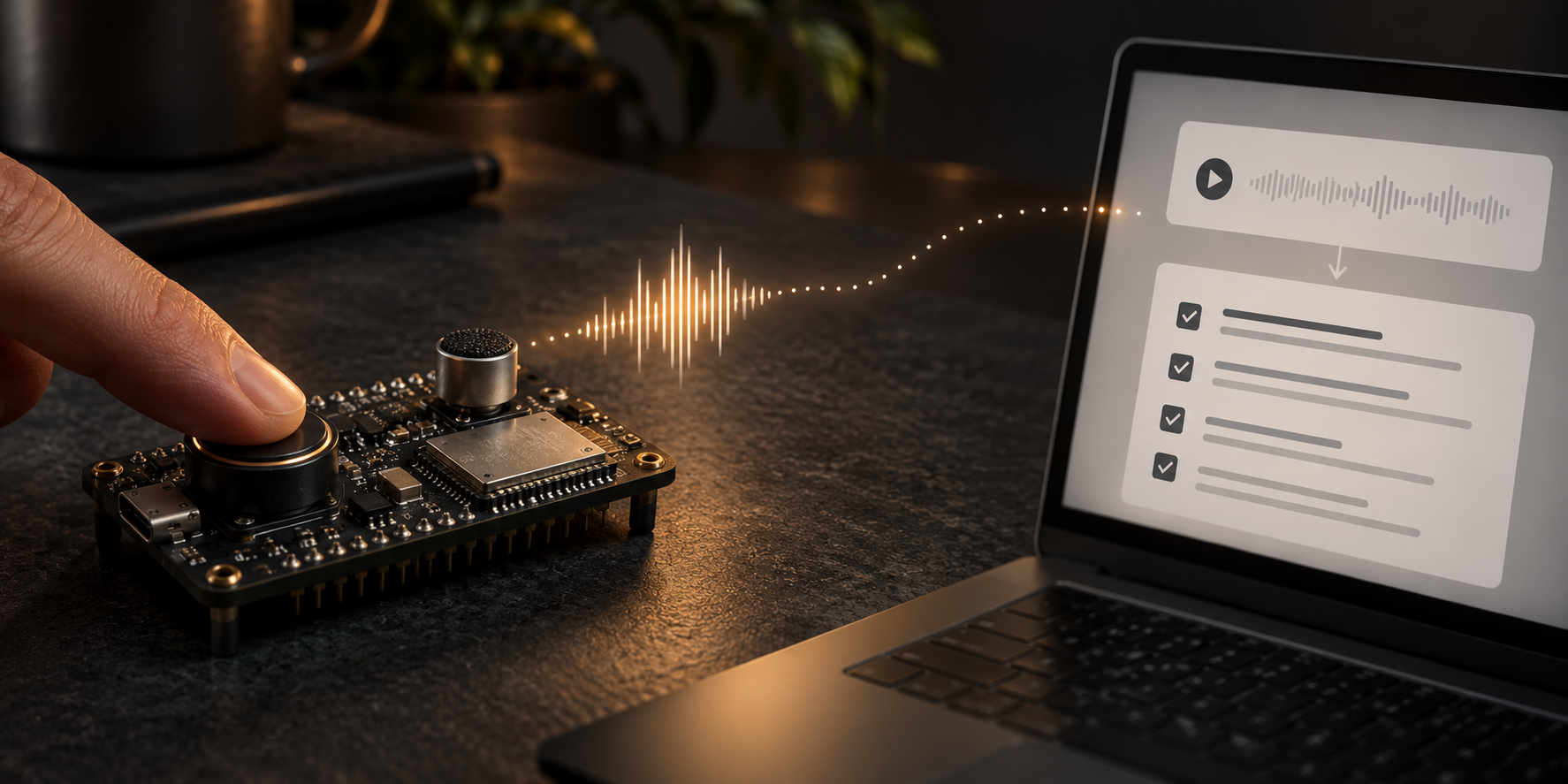
The meeting intelligence software processes recordings into structured notes. A proposed ESP32 recorder would make starting that workflow as simple as pressing a button.
The thought after the meeting
A meeting ends, and the conversation moves on. Someone promised to send a document, another person raised a question that needs a follow-up, and a decision was made that a colleague who could not attend will need to understand. If those details remain only in people’s memories, the work begins again later: replay the recording, ask what was decided, and figure out who is responsible.
I wanted a simpler path from a conversation to something a team could use. The starting point is a recording, but the useful result is not another audio file sitting in a folder. It is a clear account of the discussion, the decisions worth remembering, and the actions that need attention.
The software foundation
The existing meeting intelligence project already explores the processing side of that problem. Its documentation describes a background watcher that looks for recordings in a local folder. When a file is ready, the software prepares the media, sends it for multimodal analysis, and creates structured notes. The project also describes a Hermes Agent integration for using the extracted material in a wider workflow.
The intended notes can include a summary, decisions, and action items. For conversations that mix Tamil and English, the documentation describes producing notes that account for both languages. These are capabilities described by the project; the quality of any particular summary still depends on the recording, the processing, and a person checking the result.
That software foundation is useful for meetings already recorded on a computer. The next question in my mind was how to make capture feel just as simple in a physical room.
- RecordPress to start and stop
- TransferSend audio over Wi-Fi
- AnalyzePrepare notes and actions
- ReviewA person checks the next step
The device and transfer path are proposed; the existing software processes recordings into notes.
The proposed recorder
The device concept is deliberately modest: a small ESP32-based unit with a microphone and a physical button. Press once to start recording; press again to stop. Instead of asking everyone in the room to open an application and set up a session, the device would make the recording action visible and easy to understand.
After recording, the device could use Wi-Fi to transfer the audio to a computer on the local network. That computer could place the file where the existing watcher can pick it up. Another possible route would be to send the recording over HTTPS to an agent service when an internet connection is available. These are design options to prototype and test, not features that the reviewed files establish as working today.
The image above is an illustration of that idea, not proof of a finished piece of hardware. I estimate the parts might be around ₹1,000, but the final cost depends on the board, microphone, power supply, enclosure and sourcing. The estimate needs a real parts list and prototype before it can be treated as a price.
From notes to action
Once the recording has been analyzed, the immediate output should be a useful set of notes: what the conversation was about, decisions made, questions left open, and follow-ups with an owner where the discussion makes one clear. It should be easy to read for someone who was there and for someone who missed the meeting.
Beyond note-taking, an agent with the right connected tools could help prepare the next step: draft a follow-up email, prepare a summary for attendees, or create a task from a clearly stated action. MCP connections could provide a way to reach those tools. These are proposed extensions to the concept, not a claim that the current project already sends emails or creates every task automatically.
The agent should treat a recording as evidence to review, not as a perfect instruction. Names, commitments, recipients and ambiguous action items need checking; a person should be able to review a draft or approve an external action before it is sent.
Making a simple idea dependable
The appealing part of the idea is its small interaction: one button and a recording that becomes useful work. Making that dependable would still take testing. The prototype needs to capture clear speech, show whether it is recording, cope with a lost Wi-Fi connection, and transfer the completed file reliably without quietly losing it.
Meeting recordings can also contain private conversations. Before recording or sharing them, the people involved need to know what is being captured, where it goes, and who can access the notes. Secure transfer, access control and a clear retention approach are part of making the idea usable, not afterthoughts.
The software and the proposed physical device are at different stages. The existing project provides a foundation for turning recordings into notes; the ESP32 button is the next concept I would prototype to bring that workflow into the room.